
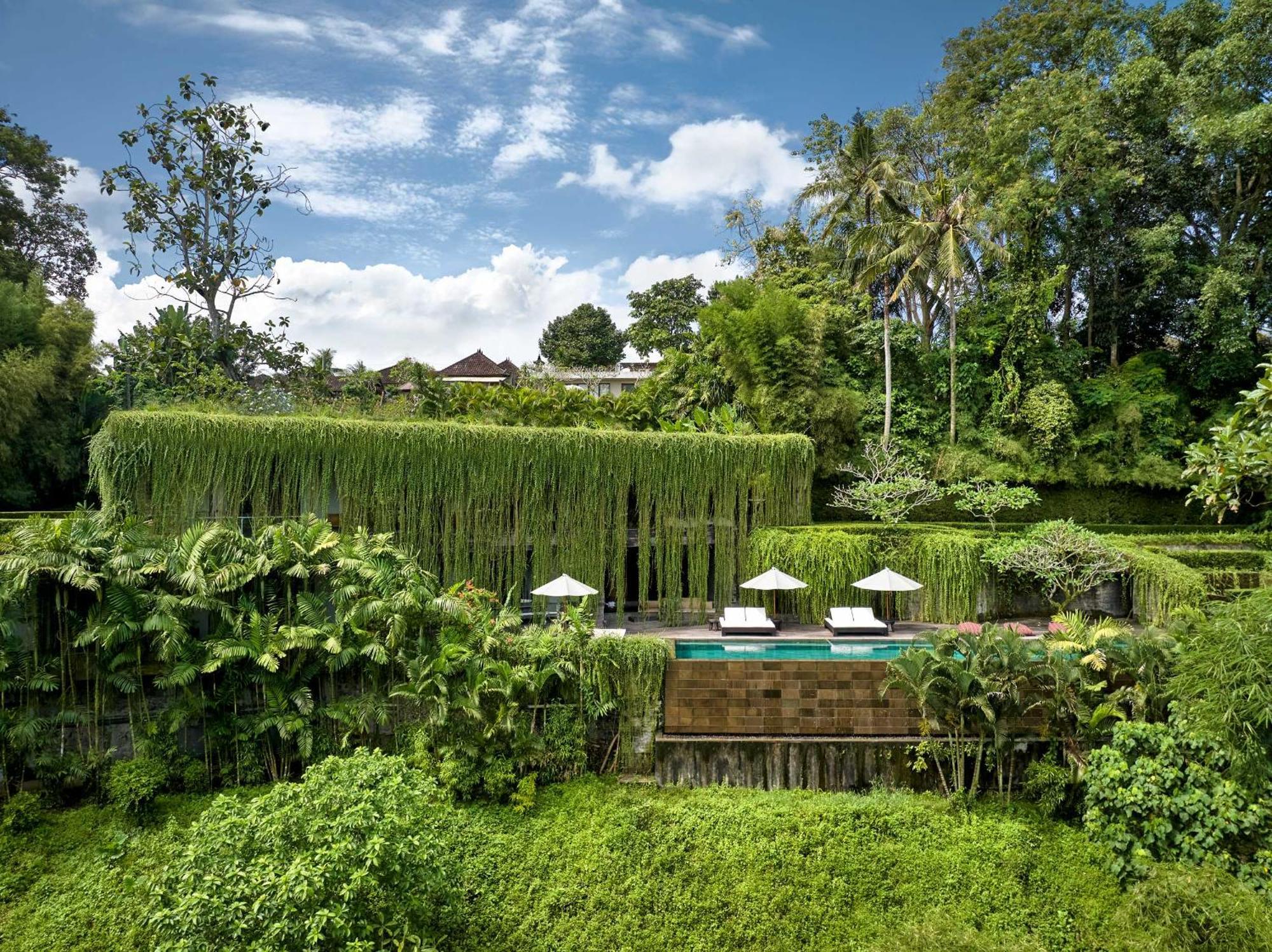
Bali Holiday Guide – The Chameleon Villa Bali architecture is not just a feat of engineering; it is a revolution in tropical design. In an era where luxury villas often compete to see which can stand out the most against the horizon, this property in the village of Buwit, Tabanan, chooses to do the exact opposite.
It aims to disappear. For architecture enthusiasts, developers, and travelers who appreciate high-concept living, the design of this villa offers a masterclass in how to build respectfully within a sensitive ecosystem.
Understanding the Chameleon Villa Bali architecture requires looking beyond the aesthetics of concrete and glass. It requires an understanding of topography, the “landscaped building” philosophy, and a commitment to radical sustainability.
The Concept of ‘Invisible’ Design
The primary objective of the Chameleon Villa Bali architecture was to create a structure that felt like it had been “dropped” into the jungle without disturbing the natural flow of the land.
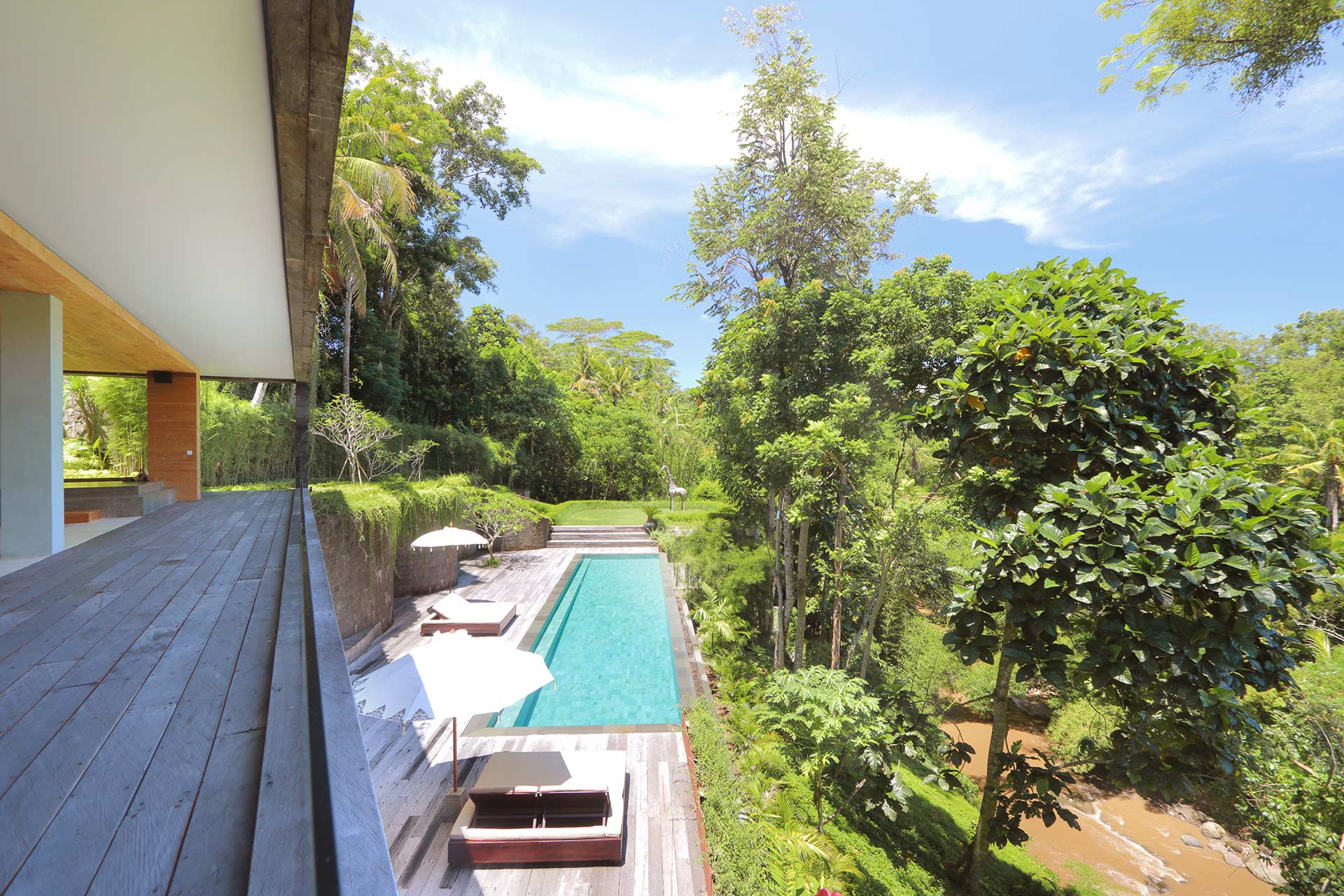
The site itself is incredibly challenging: a steep, 45-degree slope leading down to a river. Traditional builders would have flattened the slope with massive retaining walls, creating a “scar” on the hillside.
Instead, the architects at Word of Mouth opted for a “stepped” approach. By following the natural contours of the hill, the villa sits at different levels.
The “invisible” element comes from the use of green roofs. From an aerial view or from across the valley, you don’t see a roof; you see a continuation of the forest floor. This camouflage is the defining characteristic that sets this property apart from every other luxury villa on the island.
Materiality and The Industrial-Organic Contrast
A key pillar of the Chameleon Villa Bali architecture is the contrast between “industrial” materials and “organic” surroundings. The design utilizes:
- Polished Concrete: Provides a cooling effect and a minimalist, clean backdrop.
- Recycled Timber: Adds warmth and connects the interior to the trees outside.
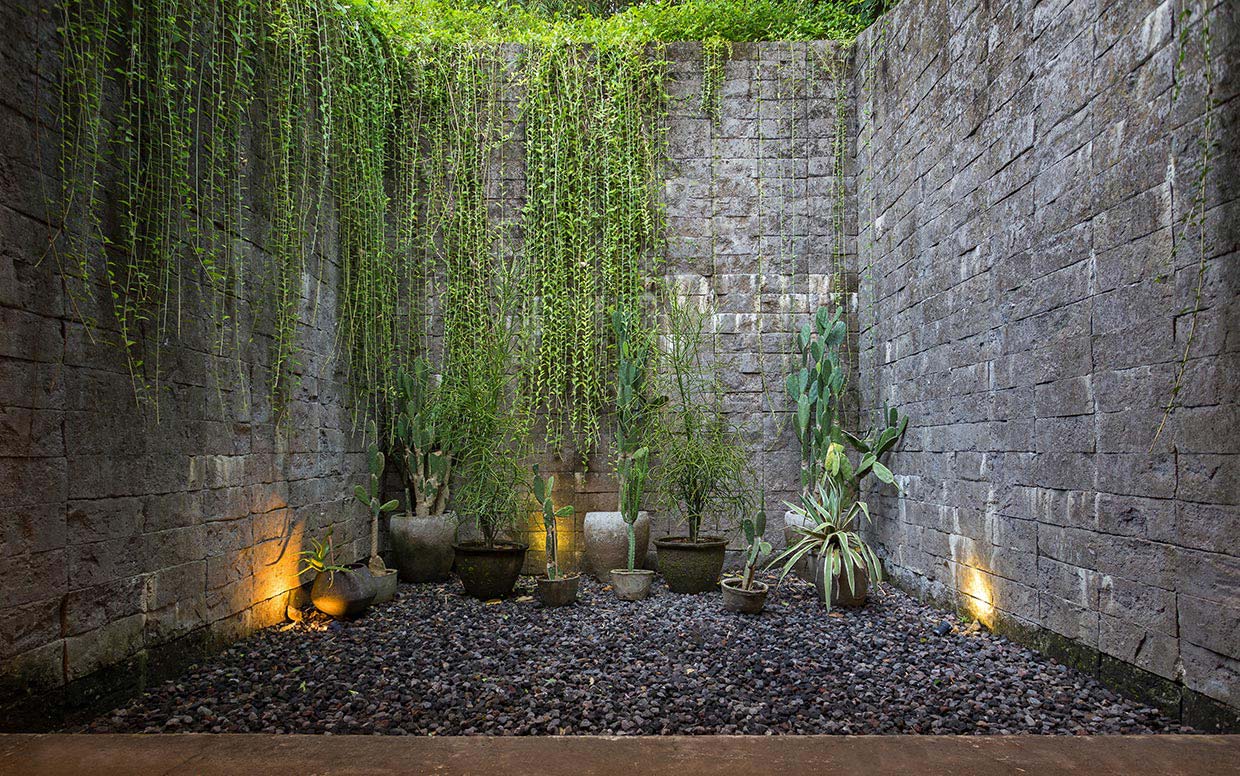
- Natural Stone: Sourced locally to ground the building in its Balinese context.
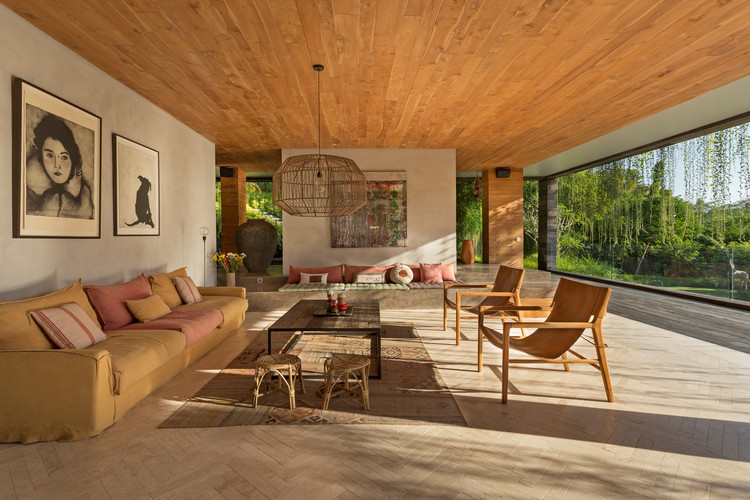
By using a neutral color palette, the architecture allows the vibrant green of the jungle to become the “wallpaper” of the home.
The glass walls are so expansive that when you are inside, you feel as though you are floating in the canopy. This transparency is a deliberate architectural choice to remind guests of their connection to nature at every moment.
Structural Innovation: The Cantilever and the Slope
The technical brilliance of the Chameleon Villa Bali architecture is best seen in its dramatic cantilevers. Several parts of the villa—including the master bedroom and the main living pavilion—project out over the slope. This creates a “floating” sensation.
From an engineering perspective, this required deep-pile foundations to ensure stability on the volcanic soil of Tabanan. However, the visual payoff is immense.
It creates a sense of weightlessness that defies the heavy materials used in the construction. It also allows for unobstructed 180-degree views of the river below, as there are no support pillars to block the sightlines.
Passive Cooling and Tropical Intelligence
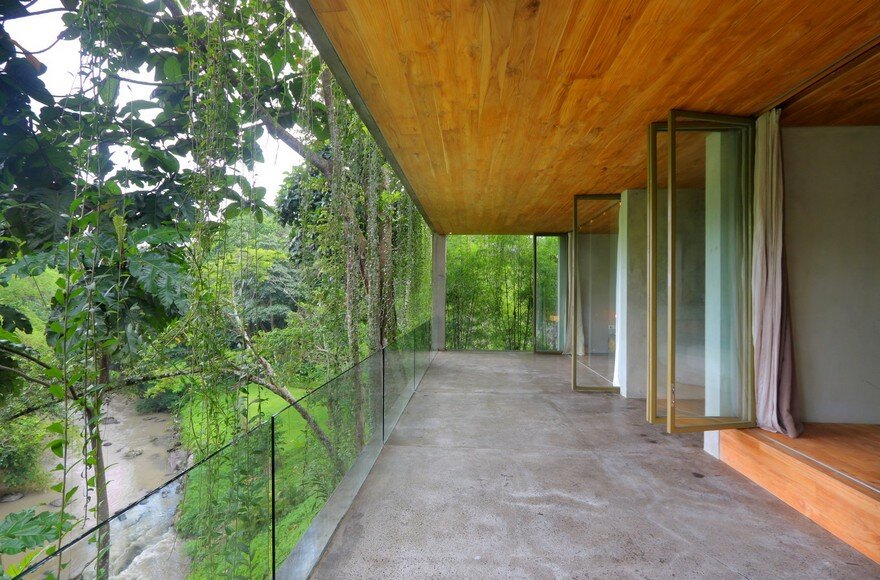
One of the most overlooked aspects of the Chameleon Villa Bali architecture is its commitment to passive cooling. Bali is hot and humid, and most villas rely heavily on 24/7 air conditioning. The Chameleon Villa, however, was designed to breathe.
The orientation of the buildings takes advantage of the natural cross-breezes coming off the river. Furthermore, because several rooms are partially “buried” into the hillside, the earth acts as a natural insulator, keeping the rooms significantly cooler than the outside air.
The green roofs also play a functional role here, absorbing solar radiation that would otherwise heat up a traditional tile or tin roof.
The Interior Layout: Privacy Through Separation
The Chameleon Villa Bali architecture is divided into several “pavilions.” This is a modern take on the traditional Balinese Compound style. By separating the sleeping quarters from the social areas, the architects ensured total acoustic privacy.
- The Social Hub: The upper level houses the kitchen, dining, and main lounge. It is open and airy, designed for gatherings.
- The Private Sanctuaries: The bedrooms are tucked away at lower levels. Each has its own private garden or terrace, ensuring that even if the villa is at full capacity with 12 guests, every individual can find a moment of absolute solitude.
- The Office/Library: Even the workspace is an architectural marvel, featuring a “secret” feel that inspires deep focus.
Sustainable Modernism in 2026
As we look at the Chameleon Villa Bali architecture in 2026, its sustainable features have become the gold standard for new builds.
The integration of solar panels is not an afterthought but is woven into the structural design. The water recycling systems are hidden beneath the floors, feeding back into the landscaping.
This villa proves that “luxury” and “eco-friendly” are no longer mutually exclusive terms. You can have a 20-meter infinity pool and high-end finishes while still respecting the carbon footprint of the building process and the ongoing operation of the home.
The Impact on Balinese Architecture Trends
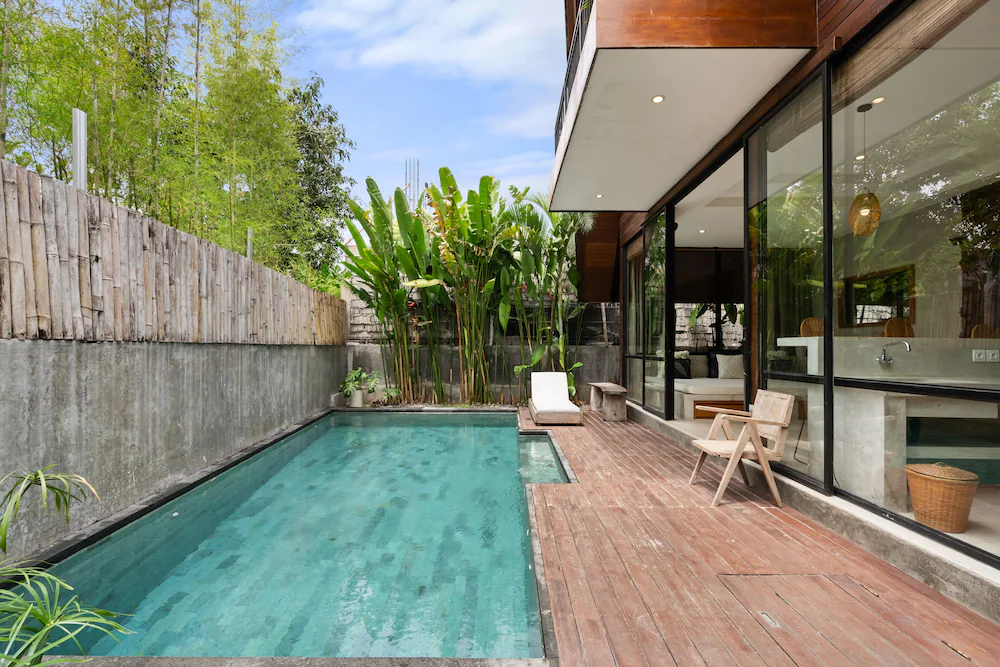
Since its completion, the Chameleon Villa Bali architecture has influenced a new wave of “Earth-First” developments across Indonesia. We are seeing fewer “white boxes” and more integrated, camouflaged designs in Seseh, Pererenan, and Uluwatu.
Architects are moving away from the “Mediterranean” look that dominated Bali for a decade and are returning to a style that prioritizes the land.
The Chameleon Villa remains the “Grandfather” of this movement—a reminder that the most beautiful thing we can build is something that respects what was already there.
A Living Architectural Museum
Staying at or studying the Chameleon Villa Bali architecture is like visiting a living museum of modern design. It challenges our perceptions of where a building ends and nature begins.
For the guest, it offers a sense of peace that is hard to find in traditional hotels. For the architect, it offers a blueprint for the future of tropical living.
If you are planning a visit to Bali and have a passion for design, seeing this villa in person is a necessity. It is a rare example of a building that doesn’t just sit on the earth it lives with it.